Showing posts with label Order of the Dragon. Show all posts

Saturday, February 21, 2026

Sons of the Dragon: Blood and Iron cover reveal

I'm so thrilled to share the cover of the first in my continuing series about the Dracula family, one of history's most fascinating and misunderstood dynasties.

Coming June 2026

Everyone knows the name Dracula, which history and myth assigned to Vlad III, namesake of Vlad II Dracul, the Dragon of Wallachia, my protagonist in Order of the Dragon. Did you know the name “Dracula” is a cognomen of “Dracul,” meaning “the son of?” And what do you know about Mircea Dracula?

Before Vlad III became legendary, even immortalized in Bram Stoker’s work, Dracula, there was his elder brother Mircea Dracula, the firstborn legitimate son of Vlad II. Blood and Iron is Mircea’s story. Spanning six turbulent years of his youth, the narrative portrays how he became a warrior in the shadow of Ottoman invasions, treachery among noblemen, and a father who faced impossible choices. Mircea’s experiences were much the same as a young commander caught up in wild carnage against the Turks at Varna in 1444, and battling alongside Burgundian and Venetian crusaders in the search for a lost king.

This is medieval Wallachia or modern-day Romania, as you've never seen it. Not the gothic horror of Bram Stoker's imagination, but the brutal, breathtaking reality of a family trying to survive at the crossroads of Christendom and empire.

Blood and Iron is the first of three novellas in the new Sons of Dragon series. Each story follows one of Vlad II Dracul's sons: Mircea and Radu Dracula, and the one history would call Vlad the Monk. Three brothers. Three fates. One legacy forged in blood and iron, and bound to the destiny of their sibling Vlad III, whom myth and history have deemed the most ruthless of the Dracula family. But he wasn’t alone in his savagery.

More details on official release dates in June 2026 and where to find the novellas are coming soon. Thank you, as always, for your interest. It means everything.

Sunday, December 3, 2023

Time flies when you're having fun, or writing novels.

It's been a tremendous twelve months. A new job and health issues have impacted my writing time, but I'm still at it, trying to wrap up the second half of Vlad Dracul's story in Order of the Dragon - Book Two. 

For those who've read my novels in the past, you know that I'm an obsessive researcher and try to get the details right. That's meant scrapping my novella about Vlad's eldest son Mircea, whose actions can't entirely be separated from his father's own, and requiring me to narrow my focus to the other two sons, Radu and Vlad the Monk. What about Vlad Dracula, you may ask? The inspiration of the vampire legend? He appears in each of my novels and novellas about his family, almost as a force of nature, but I have very specific reasons for choosing NOT to make him a protagonist in a third novella. One, Vlad Dracula has been done to death in fiction. The reality of his life AND the myth of his being a vampire (thanks ever so much, sarcastically, to Bram Stoker, as the real Vlad Dracula was WAY MORE INTERESTING). There's nothing new or nuanced that I could reveal about his experiences. Besides, I find his father and brothers equally interesting figures whose stories deserve to be told. Two, if you want to read one of the best portrayals of him in fiction, get a copy of C.C. Humphrey's Vlad: The Last Confession. You will be immersed as I was.

Since 2005, I've been blessed to share a friendship and partnership with author Mirella Patzer, but this year marked the culmination of a novel we've been working on since 2019, when she visited me during one boiling August here in Barbados. As I'm known for writing fiction set in Europe's Middle Ages, this novel, tentatively titled The Ordeal of Alice Clifton, is a complete departure from that period and takes readers to 18th century Philadelphia in the aftermath of the American Revolution. The novel tells the story of a real-life figure, the mulatto slave Alice Clifton, who endures the attentions of a brutal man related by marriage to the first Speaker of the House of Representatives. His rapes result in her pregnancy, and when her daughter dies, she is accused of infanticide. But for her trial and the intervention of the then leader of the Philadelphian government, Benjamin Franklin, no one would ever know Alice Clifton once existed. Mirella and I are shopping around for a home for our great collaboration. I'll announce future publication plans here. 

By the way, Mirella's newest novel, Her Secret Legacy, just made its debut on December 1. If you weren't aware of her or her work, why not get started with a copy of her latest today.  

My attention to detail in the Sultana series of novels also offered another chance to collaborate with an author whom I admire; David Blixt. He may not remember, but I first encountered him while attending a session he conducted at the Historical Novel Society's 2013 conference entitled, "Swordplay and Its Influences on Culture." Read all about his session here - and you can ask me sometime why I wore a dress and sandals to an event where attendees handled real swords! Little did I know back then that five to six years later, David and I would work together on an anthology, We All Fall Down: Stories of Plague and Resilience (2020). His contribution made me cry. It's rare for an author's words to have such a profound effect on me. If you haven't read his stories, get started here today. And not just because he and I are working on a project partly set in Moorish Spain that you'll want to read! More details about our work in the future.

Most recently, that obsession with Moorish Spain's history also led a doctoral student at the University of Granada to contact me regarding her thesis, which focuses on the sultanas of Granada, but also examines the importance of historical fiction. I'm a prodigious reader and history buff and will admit, I struggle with those who say they don't enjoy reading or find history dull. It was a great honor to share some correspondence with the student and to reflect on the questions she asked. As I told her, Moorish Spain has lived on in my head and heart for over thirty years. Ever since I was a freshman in college, where I first discovered the Islamic presence in Europe and how it was eradicated. I also related to the student that historical fiction's best service to history and historians is to evoke interest in the past, keeping history alive and relevant to our experiences today, and firing the imagination of readers. My motivation for continuing to write. 

Monday, December 12, 2022

The knightly Order of the Dragon in medieval history

On this date, in December 1408, a new chivalric order appeared in Hungary, partly modeled on the Order of Saint George. The Order of the Dragon, formed under the patronage of King Sigismund of the House of Luxembourg and his second wife, Queen Barbara of the House of Cillei. The dire circumstances that led to the creation of the Order, the roles of its most prominent members, and its relevance during the last century of the Middle Ages partly inspired my newest novel, Order of the Dragon – Book One, coming December 16, 2022. In it, Prince Vlad of Wallachia (modern-day Romania) seeks a knighthood within the Order of the Dragon, while hoping to rule his homeland, and save his family and people from the threats posed by the rapacious Ottoman Empire.


During the previous century, before the Order arose, most of Eastern Europe saw the Ottomans under their leader Osman Bey, who came from the Anatolian region of Turkey, conquering the lands formerly held by the Byzantine Empire. Although the European nations responded to the Turkish incursions, the invasion of the Balkans occurred. After Osman’s son Orhan captured the strategic port of Gallipoli in 1354 and made it one of the first Ottoman strongholds in Europe, the Turkic expansion seemed inevitable. Most devastating to the populations of the Balkans was the practice of devşirme; the claiming of Christian boys between the ages of seven/eight and twenty, stolen from their families and trained as future soldiers and bureaucrats of the Ottoman Empire.

Most of Serbia became a vassal state when Sultan Murad I, the son of Orhan, paid the ultimate price for his victory at the Battle of Kosovo in 1389. Within seven years, the Ottomans established almost full control over Bulgaria at the Battle of Nicopolis in 1396, after they eliminated a coalition that comprised warriors from Hungary, Wallachia, Bulgaria, France, and Germany. Fifteen thousand European fighters and their leaders died at Nicopolis, but King Sigismund numbered among the survivors. Only the Mongol capture of Murad's son, the Turkish Sultan Bayezid I in 1402 and the subsequent civil war of eleven years between his sons offered hope of a respite.

Details about the Order of the Dragon survive. With Saint George, the dragon-slayer as its patron, the knights of the Order pledged themselves to two duties; the defense of King Sigismund and his family, and the defeat of the Turks. Part of the statute of the Order that survives in a copy from 1707 shows that the king held the following expectation: “…in company with the prelates, barons, and magnates of our kingdom, whom we invite to participate with us in this party, by reason of the sign and effigy of our pure inclination and intention to crush the pernicious deeds of the same perfidious Enemy, and of the followers of the ancient Dragon, and (as one would expect) of the pagan knights, schismatics, and other nations of the Orthodox faith, and those envious of the Cross of Christ, and of our kingdoms, and of his holy and saving religion of faith, under the banner of the triumphant Cross of Christ …”

The Order was not only intended to fight the Turks, but also to preserve Sigismund’s hold on the throne. History shows that he faced constant danger. Born in Bohemia (the modern-day Czech Republic) he ascended the Hungarian throne through marriage in 1385. Years later, when his first wife Queen Mary died in a riding accident along with the child she carried, Sigismund feared he would lose power. He answered Pope Boniface IX’s call for a new crusade against the Ottomans, which ended in disaster at the Battle of Nicopolis. Revolts arose against Sigismund’s reign, but he allied himself with powerful noblemen to keep control of the kingdom. Many of those men would become the first knights of the Order of the Dragon.

Its members, who were called Draconists, included princes and nobility who had lost their lands to Turkish attacks. The Draconists often wore, suspended from a necklace, the image of a curled-up dragon with its tail coiled around its neck. On its back, from the neck to its tail, the red cross of Saint George stood out against the background. Latin inscriptions of “O quam misericors est Deus” (meaning, how merciful is God) and “Justus et paciens” (meaning, just and patient) accompanied the dragon emblem. The Order’s members also displayed a seal in the form of an Ouroboros, an ancient dragon motif. They wore red garments with a green mantle on ceremonial occasions and donned a black mantle on Fridays.

Some of the members numbering between twenty-one and twenty-five first inducted into the Order include the following persons who feature prominently in my new novel, Order of the Dragon – Book One:

· Sigismund of Luxembourg, King of Hungary.

· Barbara of Cillei, Sigismund’s wife and Queen of Hungary.

· Hermann II, Count of Cillei, father of Queen Barbara.

· Frederick of Cillei, son of Hermann II and brother of Queen Barbara.

· Stefan Lazarević, Serbian ruler who abandoned the Ottoman alliance after his father’s death at the Battle of Kosovo in 1389 and later allied with King Sigismund.

· Fruzhin, Prince of Bulgaria, the maternal nephew of Stefan Lazarević, and a surviving son of the Bulgarian ruler murdered after the Battle of Kosovo, Ivan Shishman.

· Nicholas II Garai, married to Queen Barbara's sister, the Palatine or chief officer of Hungary under King Sigismund, who also rescued him when Hungarian revolts occurred after the losses at Nicopolis.

· Stibor of Stiboricz, the governor of Transylvania.

· Pipo of Ozora, count of Temes, a Hungarian magnate, Florentine by birth.

· Hrvoje Vukčić Hrvatinić, Grand Duke of Bosnia and an erstwhile enemy of King Sigismund.

· Wladyslaw II Jagiellon, King of Poland and Supreme Duke of Lithuania, who was also an erstwhile enemy of King Sigismund.

· Vytautas of Lithuania, Grand Duke of Lithuania.

· Ernest of the House of Hapsburg called the Iron Duke of Austria.

Others would join them over the years, including the rulers of England, Denmark, Sweden, Norway, and Aragon in Spain. Learn more when Order of the Dragon – Book One makes its debut later this week.


------------

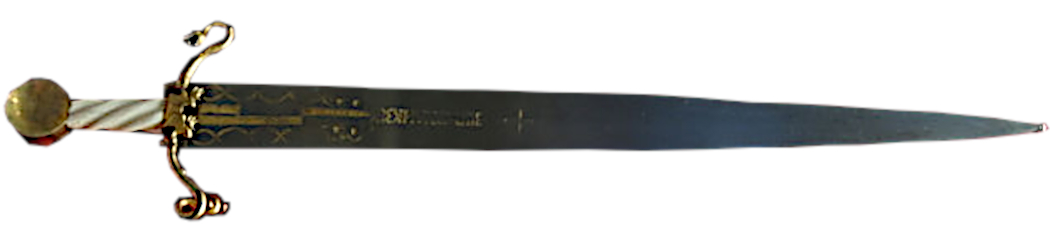
Note: The images included in the post; 1. The ceremonial sword of the Order of the Dragon, 2. The dragon emblem, 3. Sigismund of Luxembourg,  4. Fruzhin, Prince of Bulgaria, and 5. Pipo of Ozora, are in the public domain and may be found at Wikipedia.

Wednesday, September 7, 2022

Order of the Dragon, Books 1 and 2 - Covers

My latest novel, Order of the Dragon, explores the family of Prince Vlad Dracula of Romania, battling Europe’s Christian and Turkic enemies. Vlad Dracul was the father of the real Dracula, who inspired centuries of vampire legends thanks to author Bram Stoker's quintessential novel. The story is told in two parts; the first half debuts in December 2022 and the second half in March 2023.


Order of the Dragon
offers a prelude to the novella series Sons of the Dragon, three overlapping stories about Dracula's brothers; each of whom, like him, would succeed their father as a medieval Eastern European ruling prince. Those novellas will debut in June 2023, September 2023, and December 2023. So while it's been a long, long time since I've posted (or frankly, published) anything, clearly I've been quite busy.

Friday, February 9, 2018

Writing the unknown: about Vlad Dracul and Romania in Order of the Dragon

Writing about new characters is rather like meeting strangers who could become potential friends. You're not sure how the relationship will go, but you're intrigued enough to move beyond introductions. Just as writing about a new setting or period is akin to settling into a house, going from room to room, learning about the spaces. Sometimes, as with new people and places, you discover good or unfortunately unpleasant surprises. Still, other aspects remain hidden beneath the surface. With my usual enthusiasm for strange places and people, I've dived right into the abyss that is the history of Vlad II Dracul and his Romania.

If you know me and my writing, you've guessed I like elusive characters and locales, in part because I love researching about them and uncovering those hidden details. I couldn't have chosen a more enigmatic figure than Vlad II Dracul, father of the real Prince Dracula, or such a place as fifteenth-century Romania in my latest WIP, Order of the Dragon. A land mired in superstition, governed by a man who is still a mystery more than five hundred years later. A prince who had ruled over a region called Wallachia with some interruption. One who had joined a monarchical chivalric order dedicated to the protection of Christendom with fellow members who included the rulers of Naples and Aragon. But in many ways, Vlad became subservient to the Sultans of the Turks in the Ottoman Empire. How could a dedicated Christian warrior accept the dominion of Islamic rulers?


I've long imagined Vlad as a practical man, given the choices he made throughout his life. Despite his commitment to the Order of the Dragon, which counted the Holy Roman Emperor Sigismund as its founder, the political reality Vlad faced required tough decisions. He took his vows dutifully but what compelled him to cooperate with the Turks? I've spent much of my time on research also pondering the strange circumstances of his existence. Not that the research has been a straightforward process - would that have been too much to ask? One of the chief secondary sources I've relied upon for the story of Vlad's life is clearly wrong because it places Vlad in areas where logic and subsequent events dictate he could not have been. So, some mysteries about the historical figure that inspired my hero in this novel remain. To some, no doubt his actions toward the Turks would seem less than heroic. Even craven. I believe one goal drove him; the preservation of his principality at Wallachia. To ensure that future, he might have willing to pay the ultimate price. 


Romania in the fifteenth century required rulers willing to make difficult decisions. Bordered to the northeast by Moldova, the origin of Vlad's wife, Hungary in the west and Serbia and Bulgaria in the south, all such lands faced constant Turkish threats. By the late 1300's the Ottomans had claimed much of Bulgaria and imposed heavy taxes and in the mid-fifteenth century, the incursions of the Ottomans had wrested control over the former Serbian Empire. Both essentially existed as vassal states of the Turks. Romania remained in the path of their ambitions that extended to the seizure of Rome. The Romanians lived in three principalities; Vlad controlled Wallachia after the death of his half-brother. Yet he did so after a time by the permission of the Turks, who had imposed a yearly tribute of ten-thousand gold coins and at least five hundred boys to serve in the Jannisary corps. If I can ever find the wherewithal, I'd love to visit the Princely Court where Vlad had his power base in Wallachia, the ruins of which are in the foreground of the picture above. 

The introduction of Vlad in Order of the Dragon reveals some of the troubles he faces:


Chapter 1

Province of Targoviste, Principality of Wallachia, in the year of Our Lord 1443

“… The Sultan Murad Han, His Majesty, invites you to his court at the end of spring when your snows cease.”

Halil Pasha’s nasal tone betrayed his status as a highly-trained eunuch of the Turkish court. His unaccented, precise pronunciation of the Romanian language of Vlad’s birth, even if sprinkled with Turkic phrases, also revealed the envoy’s indigenous origins. As with so many other boys, the devils must have taken him as part of their blood-tax, the tribute of young boys Sultan Murad had first necessitated twenty years ago. How had Halil Pasha earned the appointment so soon? Such a youthful figure, unless the sallow, unblemished skin across his high cheekbones and the neatly trimmed beard belied the truth of his age.

Thin, yellow brows flared above Halil Pasha’s gray gaze as he scanned the occupants of the room before he regarded Vlad again. “You and your three sons must visit Adrianople, Voivode.”

He had used the Slavic term for ‘prince’ instead of Domnul but Vlad perceived the resultant echoes of dismay did not come from such a word choice. He sought out Cneajna’s face among the women ensconced in the wide gallery above the throne room. Mercifully, he did not find her. Had his beloved wife been there for the pronouncement of her greatest dread, she might have lost her composure. Almighty God had blessed him with a woman who would give her life for their sons. She could have during the birth of their second child. His Cneajna, born Vasilisa Maria of the House of Musat in the northeastern principality of Moldova. A princess in her own right before their union.

Seated on his wooden throne with the boyars and retainers gathered on either side of him, the black cape of the Order, which Vlad typically donned on Fridays, draped his shoulders. Those who knew best would understand the visit of a Turkish ambassador also merited the display of his allegiance to the Order. Beneath the mantle, he wore a long fur-trimmed coat of red brocade, over his laced shirt and loose trousers tucked into ankle-length boots. The boyars favored similar dress except for leather, fur-lined shoes with pointed tips, which he disdained as much as the velvet caps they favored.

He fingered an emblem suspended from a golden necklace. Inscribed on a double cross, the Latin words ‘Justus et Pius’ gleamed in the glare of the torchlight. Just and Faithful, one of the Order’s mottos, paired with the phrase, ‘O quam miscericos est Deus’ for the mercy of God. Under the cross, a medallion featured the wings of an incurved dragon, topped by a blood-red cross. The tail coiled around the fearsome figure’s neck. Its paws outstretched, with jaws opened as if to devour Christendom’s enemies.

He raised his head. “I thank the Sultan for his gracious invitation, but my eldest son has his apprenticeship for knighthood and will not be at Targoviste in the coming spring.”

“You have other children, whom my master would welcome with honor. They can play in the palace gardens with Mehmet Celebi, His Majesty’s third son. I believe the noble prince at ten-years-old is the same age as your Vlad Dracula.”

---Learn more about Vlad Dracul and late-medieval Romania when Order of the Dragon makes its debut later this year.


Ready for the cover reveals of the Sons of the Dragon novellas?

All three covers of the Sons of the Dragon novellas are ready. My cover artist, Mirella Patzer, did a stellar job as usual. It helps that we...