Showing posts with label Meet My Main Character. Show all posts

Saturday, January 13, 2018

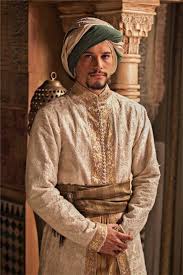
Meet the characters: Sultan Muhammad al-Zaghal

Muhammad al-Zaghal, whose sobriquet meant 'the brave' or 'the valiant' lived in the shadow of his elder brother, Sultan Abu'l-Hasan Ali for years. Then, palace intrigue and poor circumstances gave access to the power the younger man may have dreamt of all his life. Readers of Sultana: The Pomegranate Tree will discover more about his fate in Sultana: The White Mountains; if you don't want to know before you've read either book, this is your last warning - stop reading now. Spoilers for the last novel in the Sultana series lie ahead. 

Still with me? Prince Muhammad al-Zaghal was the second son of the Nasrid Sultan Abu Nasr Sa'd, who ruled Moorish Granada from summer 1454 to January 1455, then from late summer 1455 to 1464, when Abu'l-Hasan Ali usurped the throne. The prince has been portrayed most recently onscreen in the Spanish TV series, Isabel. It's uncertain where Muhammad al-Zaghal's birth occurred or when but he would have been born between 1437 and 1450, the respective dates at which his elder brother Abu'l-Hasan Ali and their younger sibling Yusuf entered the world. Whether the brothers had the same mother is also unknown, but their paternal heritage is clear. The links from their father and his father Prince Ali, a son of Sultan Abdul Hajjaj Yusuf connected them to Sultan Muhammad V and even beyond to the first Nasrid ruler. While Abu Nasr Sa'd did not have a legitimate claim to the throne, his family had founded a royal dynasty on the idea of usurpation.

From the beginning of their father's reign, there is some evidence of closeness between the two eldest sons. In late summer 1455, both chased the Sultan's rival for the throne into the region of Las Alpujarras, where they captured him along with his betrothed bride and cousin to all of the men, Sultana Aisha, whom Abu'l-Hasan Ali would later marry. As for Muhammad al-Zaghal, he also married a kinswoman whose name has come down through Spanish history transcribed as Esquivilia - certainly a non-Moorish name. Readers of Sultana: The Pomegranate Tree will recall her as Ashiqa, who had her own impressive lineage with links to her husband's clan.

She was the daughter of Abu Salim Ibrahim al-Nayyar, the governor of Almeria and Maryam bint Bannigash, one of the daughters of Granada's famed minister Ridwan ibn Bannigash who was born and ended his life as a Christian named Pedro Venegas. He once served as a slave before he converted to Islam and married the daughter of his former master. Abu Salim Ibrahim al-Nayyar's mother Fatima claimed descent from the murdered Sultan Ismail II, a brother of Muhammad V, and a concubine who might have been called Cirila. Like many things about the Nasrids, the true connection of his mother is uncertain, but Abu Salim Ibrahim al-Nayyar's father was definitely Sultan Yusuf IV, another usurper whose claim to the throne derived from a more precise maternal connection to an unnamed daughter of Sultan Muhammad VI, who seized the throne of his brother-in-law Ismail II in 1361.
  
Muhammad al-Zaghal may have had up to three daughters with his wife, but no sons. He supported his brother Abu'l-Hasan Ali's ouster of their father in 1464 and at some point, became the governor of the all-important coastal bastion at Malaka, seen above. In 1467, their brother Yusuf died of the plague, which some historians have concluded could have been a welcome boon to Abu'l-Hasan Ali. His foes in the clan of Abencerrage, whose chieftains his father had murdered in 1462, might have supported Yusuf as a claimant to rule. Even if they did not, they later approached Muhammad al-Zaghal with the same idea in 1470. He rebelled against his brother for a brief period until Abu'l-Hasan Ali brought him to heel. Thereafter, the brothers remained inseparable. Muhammad al-Zaghal even brought his brother's eventual second wife and beloved companion Sultana Soraya into his life with a raid on her Christian homeland.

It's believed Muhammad al-Zaghal earned his appellation for bravery and valor because of events that took place after summer 1482 when the overthrow of his brother occurred because of a conspiracy between Sultana Aisha and her Abencerrage supporters. But I'll admit some of the actions the prince undertook were infamous and destabilized a fragile territory, which left it vulnerable to invasions by the armies of Queen Isabella and King Ferdinand. Muhammad al-Zaghal hosted Abu'l-Hasan Ali in his short exile at Malaga and the Sultan's son Muhammad XI claimed the throne, from where the siblings fought off Christian invaders in the Ajarquía region of Malaga, taking thousands of heads as trophies and even more captives. But the pair's marauding ways also undermined the kingdom as they attacked the homes of Moorish people who supported the rebellion in Granada. After his brother reclaimed the throne, Muhammad al-Zaghal went to his wife's birthplace at Almeria and tried to take the city from his younger nephew, Abu'l-Hasan Ali and Aisha's second son, Yusuf.

Readers of Sultana: The White Mountains will know how I portrayed the younger Nasrid siblings Muhammad XI and Yusuf as close relations, which parallels the bond between their father and uncle - the evident proof of loyalty between the elder men inspired me. But when Yusuf died at Almeria, likely murdered, his death possibly occurred at the command of Muhammad al-Zaghal. I've speculated in the novel that this was the first sign that he was not always a faithful adherent to his brother, because of later circumstances. In 1485, Abu'l-Hasan Ali either abdicated or lost power to his younger brother, who became Sultan Muhammad XII in his stead. At the death of his sibling, he expressed the desire to marry his sister-in-law Soraya; presumably, his first wife had not died and nothing in the Maliki interpretation of Sharia law seems to have prohibited the union. Had the new monarch long-coveted more than his brother's throne, but also his wife? More likely, the move would have allowed for greater control of Soraya's sons. But they escaped with their mother into Castile.

As the united Catholic sovereigns forced the surrender of several Moorish cities, uncle and nephew for control of Granada. In spring 1487 when the Christians threatened to take Malaga, the Sultan rallied to its defense, but the area fell after a bitter siege of several months. Muhammad al-Zaghal accepted the loss of Granada, too, and maintained control of key areas at Guadix and Almeria until December of 1489, when his wife's brother Yahya surrendered the city of Baza and took a Christian name, Pedro de Granada. By the following year, Muhammad al-Zaghal departed the Iberian Peninsula for the kingdom of Tlemcen, based at Oran, in modern-day northern Algeria. The record indicates at least one daughter and her husband remained in Spain whereas her father presumably died in Tlemcen around 1494.

Muhammad al-Zaghal is one of my favorite characters in Sultana: The Pomegranate Tree and Sultana: The White Mountains, because of his moral ambiguity. His devotion to family paired with personal ambitions makes him an intriguing figure. In studying him for years so that I could write both novels, I discovered a historical figure who was as strong a defender of Granada as his elder brother, but through his participation in the civil war, helped weaken his beloved Sultanate. I tried to be as true as possible to his history but am still uncertain about a few parts. For instance, was he in Granada as regent early in his brother's reign or did he spend his time predominantly at Malaga? Was the death of his nephew Yusuf planned or an unfortunate happenstance that occurred in Almeria? What explanation, if any, did he provide Abu'l-Hasan Ali for the murder, especially since they had long been so close? What would Muhammad al-Zaghal have done to Soraya's sons if he had married their mother - would he have supported the eventual reign of the eldest in his stead or would the boys have disappeared like the nephews of King Richard III, medieval Britain's princes in the tower? I hope readers will enjoy my portrayal of Muhammad al-Zaghal in both novels, available now.   


If you've missed any of the Meet the characters posts about this novel, find them HERE.   

Thursday, January 4, 2018

Meet the characters: Sultana Soraya

The slave who became a queen.

Most of the details that have come down through history about the Sultana Soraya bears the taint of Moorish propaganda. After all, as a Christian, she did enchant Sultan Abu’l-Hasan Ali and become his wife sometime after she had entered Alhambra Palace as a captive. Historians have said that for love of her husband, she converted to Islam, and abandoned the faith of her birth. Unfortunately for her, she faced a powerful rival in Abu’l-Hasan Ali’s first wife and kinswoman, Sultana Aisha, descended from the first Nasrid Sultans of Granada. Legend has it that Soraya so enthralled her husband that he invited his courtiers to smell her fragrant bathwater after she had finished her daily cleansing ritual. As fanciful and somewhat ridiculous as such lore seems, the truth of his devotion allowed us to know much about Soraya. Who was she and how did she attain a position beside Granada’s powerful ruler? What was her final fate? Major spoilers for Sultana: The White Mountains follow. Read on at your peril.

More importantly, how has she remained such an enduring figure of the Moorish period in its rapid decline? Washington Irving’s Tales of the Alhambra mentions her. Francisco Martínez de la Rosa published Doña Isabel de Solís, Reyna de Granada in 1837. Then in 1931, director José Buchs made the film Isabel de Solís, Reina de Granada. The Spanish TV series Isabel portrayed her as a young woman around the age of seventeen. Born Isabel de Solis, she came from a town called Martos on the Christian-Moorish border, within the province of Jaén. Her date of birth remains uncertain; I’ve seen reference to her having been as young as eight years old when she became a captive. Readers of Sultana: The Pomegranate Tree may remember that I introduced her as a girl of ten in 1468. One of the contemporary sources on the period, Hernando de Baeza (who had been a regular fixture of the Granadan court during the latter years) influenced my choice. He wrote about Isabel after 1505, stating that in 1475, she was a girl of ten or twelve. Her heritage is more certain. Her father Sancho Jimenez de Solis served as the adelantado mayor or warden of the castle at Martos. He had taken a second wife during Isabel’s girlhood, a Moorish slave called Arlaja. At some point, he had arranged Isabel’s marriage to Pedro Venegas, a relative of the lords of Luque, another town near Martos. But the union never occurred.

In the 1470’s (Baeza specifically states 1475) the Sultan’s brother Muhammad who’s more commonly known as Al-Zaghal raided at Martos and his men captured Isabel. Her father may have died at the same time, either defending the town or her. The Spanish have said she endured her detention in Alhambra Palace’s Torre de la Cautiva, but no one truly knows. Baeza tells us she became a slave to the Sultan’s daughter and cleaned the young princess’ chamber, hence my portrayal of her early captivity in Sultana: The Pomegranate Tree. Of greater certainty is Abu’l-Hasan Ali’s notice of her. She became his concubine and then his wife. As a wedding present, she received the castle at Mondújar, the ruins of which remain visible. She bore him two sons Nasr and Saad. Purportedly, this brought her into conflict with Aisha, who also had two sons by her husband, Muhammad and Yusuf. Hernando de Baeza also suggested Isabel endured a brutal beating at the hands of Aisha and her servants, reminiscent of what the Ottoman Sultana Hurrem bore at the hands at her rival for Suleiman the Great’s heart, Mahidevran – again, of less surety but the story of Isabel’s suffering added to the idea of palace intrigue between the women. While the Sultan had not declared an heir and over time, delegated the powers of regent to his brother Muhammad Al-Zaghal, their enemies of the clan Abencerrage believed he would declare one of his children by Isabel as a successor. The offspring of a Christian woman became the rivals of Aisha, whose descent and adherence to the Muslim faith remained beyond reproach.

Historians tell us Isabel converted to Islam and the Sultan renamed her Soraya, which meant ‘morning star’ in Arabic. The name is certainly accurate, but what about the religious change? In my research, I haven't discovered any captive of the Moors who retained their original name so this was a common enough practice. Conversion had long held benefits, including freedom, for no new Muslim would endure the status of a slave. Did Soraya willingly convert? Was it a requirement of her marriage? No Arab chroniclers nor Baeza mention her abandonment of the Christian faith. Not until 1530 do we have the first reference from Lucius Marineus Siculus, who states that Soraya reverted to Christianity from Islam. So where does the truth lie? Somewhere in her murky history and that of Moorish Spain.

Two occurrences may have deeply affected her life as a Sultana. In the summer of 1482, a coup against her husband occurred. She escaped with him and their children, first to their castle at Mondújar and then to Malaga, which his brother governed. Abu’l-Hasan Ali’s eldest son by Aisha took control of Granada with the support of Abencerrage clan members, further fueling the supposed conflict between Aisha and Soraya. A year later, due to the missteps of his successor, Abu’l-Hasan Ali regained power. In 1485, Soraya’s life changed again. Her husband, who had suffered the effects of epilepsy and diabetes, either abdicated or surrendered the throne to his brother. He spent his exile in Salobreña and Almuñécar, where he allegedly died and lies buried at the summit of the highest Spain mountain named after him, Mulhacén. Afterward, Soraya’s saga becomes ambiguous again. Supposedly, her brother-in-law wanted to marry her, but he never did. She either stayed by his side with her children or extended her exile in the Lecrín area of the Alpujarras region of southern Spain. If you’ve read Sultana: The White Mountains, you’ll know I had her take a different path. Why?

At some point after the death of her husband, Soraya returned to her former life with her sons. She took up the name Isabel de Solis again. After the conquest of Granada occurred on January 2, 1492, on April 30, the bishop of Guadix baptized her children Nasr and Saad as Juan and Fernando de Granada respectively. They went on to marry; Fernando became the husband of Mencia de la Vega and had no known heirs, while Juan wed twice, to Beatriz de Sandoval who gave him Isabel, Geronimo Bernardino, Juan and Magdalena, and Maria de Toledo who mothered his Maria, Diego, Pedro, and Felipa. As a final anecdote, I’ve seen one intriguing reference to the former princes of Granada later abandoning the Christian faith and crossing over to Morocco as their eldest half-brother had done in 1493. But what of their mother?

After the first decade of the 16th century, she disappears from the historical record. Until then, she purportedly lived in a house in Seville. A letter dated 1494 from Queen Isabella of a united Spain refers to her as ‘Queen Soraya, Moor’ and from 1501 and 1506, she’s alternatively called ‘Doña Isabel, Madre de los infantes de Granada’ or ‘Queen Soraya’ in documents.

Throughout my novels that chronicle events of her life, I’ve portrayed many possible facets of the personality I believe Isabel de Solis/Soraya adopted. She is clever, hiding her knowledge of Arabic gained from her stepmother Arlaja the Moor during the subsequent captivity and enslavement. She is also dutiful to Sultana Aisha, whose servant she becomes and whose daughter she cares for and admires. She also shows genuine devotion to her eventual husband Abu’l-Hasan Ali and shrinks from the idea of becoming the wife of his brother, seeing the move as a probable end to the lives of her children. Most of all, she is a survivor because ultimately, the historical figure who inspired the character was nothing less. Learn more about her portrayal in Sultana: The Pomegranate Tree and Sultana: The White Mountains, both available now. 

If you've missed any of the Meet the characters posts about this novel, find them HERE.    

Thursday, December 28, 2017

Meet the characters: Sultan Abu'l-Hasan Ali

Fifteenth century Moorish Granada enjoyed the last vestiges of glory under Sultan Abu’l-Hasan Ali of the Nasrid Dynasty, to whom I introduced readers in the Sultana series novel, Sultana: The Pomegranate Tree. The history of Abu’l-Hasan Ali culminates in Sultana: The White Mountains. If you haven’t read the new novel and don’t want to know Abu’l-Hasan Ali’s fate, stop reading this post. Right now. Don’t say you did not have a warning!

One of three known sons of Sultan Abu Nasr Sa’d and descended from the first legitimate ruler of the region, Abu’l-Hasan Ali first came to prominence when his father seized the throne in late summer 1454 at the age of fifty-five. By then, Abu’l-Hasan Ali might have been around 17 years old, the eldest of the new ruler’s male heirs, who included the princes Muhammad and young Yusuf, then four years old. The clan Abencerrage supported their parent and had declared for him at Archidona from where he rode to complete his conquest. This family had held influence in Nasrid politics for several generations since the time of Abu Nasr Sa’d’s uncle Sultan Yusuf III, whose daughter had married one of the Abencerrage ministers. The new king of Castile Enrique II also gave tentative backing. In later years under Enrique’s successor, his half-sister Queen Isabella, Abu’l-Hasan Ali became a vigorous warrior and frontier raider, like his father. For his contemporaries in Christian Spain, who called him Muley Hacén, his attacks signaled renewed conflicts with the Moors. He has been protrayed on television, most recently in the Spanish TV series, Isabel.

Before such time, Abu Nasr Sa’d sent Abu’l-Hasan Ali to the court of Enrique II in September 1454. The prince brought gifts in homage to the ruler of Castile in acknowledgement of the tenuous claim of vassalage the Christians had asserted over Granada’s rulers for two centuries. Abu’l-Hasan Ali remained at the court. In January 1455 his father and family fled to Casarabonela near Malaga, after Abu Nasr Sa’d lost the throne to the cousin he had deposed in recent months. Abu’l-Hasan Ali with the aid of Castilian forces routed the enemy at Guadix in April of the same year and came south to reunite with his relatives. Then by late summer, when his father had control of Granada again, Abu’l-Hasan Ali and his brother Muhammad pursued their foe south, capturing him alongside his betrothed wife, Sultana Aisha who was the daughter of a previous monarch. Was this the first fateful meeting of Abu’l-Hasan Ali and Aisha? Readers of Sultana: The Pomegranate Tree will recall a much earlier introduction.

At the start of his second reign, Abu Nasr Sa’d officially declared himself a vassal of Castile. Abu’l-Hasan Ali served as a military commander and oversaw domestic issues, including irrigation and cultivation of the fertile plains around Granada. With the capture and murder of his father’s rival, Abu’l-Hasan Ali not only eliminated a competing claimant for the throne but also the heart of Aisha. He married her, and they had three children, two sons called Muhammad and Yusuf and a daughter named after her mother. When the children were young, two tumultuous events occurred that would affect the future of the Nasrid Dynasty. In July 1462, their grandfather turned against his Abencerrage allies and killed their chieftains, some of whom had served as his ministers, at a banquet. Then two years later, Abu’l-Hasan Ali ousted his father and took the throne, consigning Abu Nasr Sa’d to exile and death. Not the first time a Nasrid had maneuvered against his relative or even an aging parent. Abu’l-Hasan Ali almost faced ouster when his remaining brother Muhammad rebelled against him with the support of the embittered Abencerrage clan in 1470; the youngest sibling Yusuf having died in 1467 of plague. Eventually Abu’l-Hasan Ali and Muhammad reconciled, and became staunch collaborators in the defense of Moorish Spain.

The strife which had arisen became Granada and Castile during the intervening years now abated with the ascension of Queen Isabella and her husband Ferdinand of Aragón. Truces of short duration occurred in 1475 and 1478. Three years later without any renewal of the terms of the last treaty, Abu’l-Hasan Ali responded to Castile’s request for acknowledgment of his role as a vassal by stating Granada would no longer produce coins as tribute but weapons. Then he attacked and claimed Zahara on December 27, 1481. The Castilians retaliated by seizing Alhama and besieged Loja. Although Abu’l-Hasan Ali could not remove his adversaries from Alhama, he won a decisive victory against the at Loja with the aid of the valiant old warrior Ali al-Attar, whose daughter Moraima had married Abu’l-Hasan Ali’s eldest son.

I’ve speculated about Abu’l-Hasan Ali and Aisha’s possibly fractured relationship because of events that occurred much later, but it’s clear she was not the only woman who held sway over him. In 1471, his brother Muhammad had raided at Martos and returned with a young slave named Isabel de Solis. Abu’l-Hasan Ali fell under her spell and took her to his bed. Renamed Soraya, the slave became a Sultana and the mother of two princes Nasr and Sa’d. While chroniclers have speculated that the rivalry between the Sultanas Aisha and Soraya caused friction in the harem and led to Abu’l-Hasan Ali’s overthrow in late summer 1482, I hold the belief that Aisha gained revenge for the murder of her former betrothed husband when she encouraged the support of the Abencerrage for her eldest son. Abu’l-Hasan Ali fled with his brother, younger wife, and their children to Mondújar, where he had given Soraya a castle as a wedding present, and then on to Malaga, the governorship of his brother.

From Malaga, Abu’l-Hasan Ali launched attacks against regions where he no longer enjoyed support and defeated the Castilians who had invaded the region around Malaga, where he seized thousands of their warriors as captives. After April 1483, when his eldest son and opponent made an ill-advised attack on Castile and endured captivity, Abu’l-Hasan Ali returned to Granada where he imprisoned his wife Aisha and his daughter-in-law Moraima. In the summer of 1483, his eldest son obtained his release and settled in Guadix from where he and his allies tried to attack Granada, but Abu’l-Hasan Ali’s forces repulsed them. He also pursued and obtained a judicial decree, a fatwa, against all the supporters of the rebellion on September 15. While no one knows the origins, by the same time in the following year, historians believe he had started suffering the effects of epilepsy and diabetes, the latter of which deteriorated his eyesight over time. His brother had gained greater power during Abu’l-Hasan Ali’s diminished state. As early as the spring of 1485, rumors abounded that he would abdicate and by the following season, he no longer held the throne. His brother ruled instead while he withdrew to Salobreña and then Almuñecar. There he died that year and purportedly lies buried somewhere along the summit of the highest mountain peak of Spain bearing the name Mulhacén, pictured above.


In Sultana: The Pomegranate Tree and Sultana: The White Mountains, I’ve portrayed Abu’l-Hasan Ali as a proud, vengeful, and wily man, but never boastful. His threats are never empty, and he always has the will and means to carry them out. How much could this have differed from the historical figure who inspired my character? The events of his life, taken from the time he captured his future wife’s betrothed husband, his theft of the throne from his father, his imprisonment of Aisha and quarrels with their sons showed his dangerous nature. But there was another side to him, surely, a man devoted to those who loved him especially Soraya. Had Aisha truly loved him, too, I believe his fate and that of Moorish Spain could have been quite different. His enemies, Queen Isabella and King Ferdinand would not have taken advantage of the internal strife among the Nasrids. But fate and matters beyond Abu’l-Hasan Ali’s control led him along a different path. Share his final journey in Sultana: The White Mountains, available now.

If you've missed any of the Meet the characters posts about this novel, find them HERE.

Thursday, December 21, 2017

Meet the characters: Sultana Aisha

“Do not weep like a woman for what you could not defend as a man.”

With these words ascribed to her, the Nasrid Sultana Aisha of Granada has come down through history and legend as a mother who harangued her son Sultan Muhammad XI for his failure to preserve seven centuries of Moorish rule in southern Spain. But did the real historical figure, one of the last queens of Granada, truly speak these words?

If you’ve read my latest Sultana series novel, Sultana: The White Mountains, you already know I didn’t include any such statement or you may have wondered why I chose not to, given the association of Aisha with the castigation of her son. As portrayed in the Spanish TV series, Isabel, by Alicia Borrachero, the character certainly delivered the line with enough anger to be believable and set her beleaguered son to weeping. The occasion for Aisha's fury purportedly arose at the Puerto del Suspiro del Moro, along the mountain pass called the Moor’s last sigh in the snow-capped Sierra Nevada. The Moors traveled through the route to a new home in the steep Alpujarras region. My reasons for not having Aisha berate her son are simple.

Not only do I believe the attribution to her is false and a means by which Muhammad’s enemies, Queen Isabella and King Ferdinand denigrated him. To my knowledge, none of their courtiers or chroniclers accompanied the last members of the Nasrid Dynasty to Las Alpujarras, so there is no factual account the Catholic monarchs could have relied upon to give rise to the fabled rebuke. Aisha hardly behaved as a weak-willed, tearful woman. She couldn't afford to be, so the idea of her considering women as tearful or assigning poorer attributes to women doesn't fit her history.  Also, in my depiction of the character based on an awareness of the real Aisha, she played a significant role in the unraveling of Moorish Spain and the loss of Granada’s Alhambra. To understand further you’d have to know Aisha’s history, much of which I’ve detailed in the novel about her, Sultana: The Pomegranate Tree and in the related website section dedicated to her and other contemporaries, entitled About the historical figures.

Aisha was the daughter of Sultan Muhammad IX al-Aysar and a direct descendant of the first Nasrid ruler. I’ve never discovered her date of birth but can presume she was born before March 1448; that’s the date her father gifted the “big garden of the old citadel” to her and her sister Fatima. Then she appears in the historical record again with a betrothal or marriage to her father’s successor Sultan Muhammad X al-Sagir, one among her royal cousins who had incidentally wed her sister (not Fatima) earlier and had two young sons. What can I say? Nasrids liked to keep in all in the family; the throne and their unions.

Regrettably for Muhammad X, another cousin wanted to rule just as much. After Prince Abu’l-Hasan Ali caught Muhammad X, his sons, and Aisha in the mountains, they returned to Granada, where the captives died, and Aisha became the first bride of Abu’l-Hasan Ali. In Sultana: The Pomegranate Tree Aisha remains behind to stand alone against her lover’s enemies, permitting him an opportunity for escape. Regardless of her choice to fight or flee, I’ve long supposed she could not have loved a man who killed the one whom she had otherwise united with and her paternal nephews. But I’ve had no reason to make that assumption, except for the events leading up to a coup in the summer of 1482.

Myths have influenced much of the chronicles about the Nasrid Dynasty. Within Alhambra Palace in the area designated as the harem or private family domain, the Hall of the Abencerrages references a family of chieftains and court ministers who purportedly died there at the orders of Abu’l-Hasan Ali, which some said occurred because one of the chieftains loved Abu’l-Hasan Ali’s second wife. The supposed proof of this terrible event includes several areas tinged red in the room’s central fountain. No matter what the complex’s tour guides may say, the truth is less fanciful. The reddish traces visible in the hall’s fountain basin above are rust residue. Abu’l-Hasan Ali’s father murdered some of the chieftains and ministers, not all, after accusing them of having stolen the taxes due to the Sultanate. In the summer of 1482, the survivors allied with Aisha and overthrew Abu’l-Hasan Ali, placing their eldest son Muhammad on the throne.

As much I have admired Aisha as a heroine and a patriot of Granada in its final years, I could not have ignored how her conflicts with her husband helped seal the fate of her land and its people. I’ve long supposed that had she and Abu’l-Hasan Ali united against their common enemies, Moorish Spain might have lasted much longer, with her husband defending the borders and Aisha maintaining the unity of their family. But Queen Isabella and King Ferdinand were able to exploit the deep divisions of a dynasty fractured from within, caused in great part by Aisha’s opposition to her husband and her support of their son’s rule. While Muhammad was not as ineffective as historians have long assumed, his father had been one of the last great Sultans, a warrior and a diplomat with the skill to stave off intrusions at the border for almost 20 years of his reign. In such a capacity, unfortunately, Muhammad could not compare to Abu’l-Hasan Ali.

So, if Aisha blamed her son for their losses, she could not legitimately deny her part in them either. In my portrayal of her, I wanted readers to know the complexity of the woman behind the historical figure who has emerged from scant history mired in legend. She is a mother who loves her children and grandchildren with as much fervor as she devotes to Granada and Alhambra Palace. A fierce supporter of her way of life who never forgave her enemies, Christian or Moor. A wife who may have even admired her warrior husband, but could not absolve him of offenses of the past. A proud Sultana who defended her legacy. Learn how the story of Aisha’s life, which began in the preceding novel, culminates in Sultana: The White Mountains.

And, if you've missed any of the preceding Meet the characters posts about this novel, find them HERE.

Thursday, December 14, 2017

Meet the characters: Sultan Muhammad XI

Imagine bearing the blame for the downfall of your kingdom and people, and the loss of a legacy that had lasted for more than seven centuries. Dismissed throughout history as a weak-willed impostor on the throne. A burden well-understood by my second protagonist in Sultana: The White Mountains.
 
His Spanish contemporaries rendered this historical figure’s given name as Boabdil. I suppose it was an easier morsel to handle rather than the mouthful, Abu Abdallah Muhammad ibn Abu'l-Hasan Ali. His enemies also referred to him derisively as “El Rey Chico” for the boy king. Muhammad would acquire other names and titles throughout his lifetime, the most important as Sultan Muhammad XI of Granada, and the most unfortunate being “El Zogoibi” meaning the Unlucky. Two more recent depictions of him onscreen include the Spanish series, Isabel, and the fantasy film Assassin's Creed.


A direct descendant of the first Sultan Muhammad of the Nasrid Dynasty, the exact date of my protagonist’s birth remains uncertain. I’ve seen references to him as being born in as late as 1464 or as early as 1459. He entered the world certainly sometime after August 1455. That’s the period in which Muhammad’s eventual mother, Sultana Aisha, the daughter and betrothed or bride of other men named Muhammad would have endured the murder of the man she had been with and a subsequent marriage to his captor, their cousin the prince Abu’l-Hasan Ali.

The circumstances and consequences of this union caused future discord in my preceding novel Sultana: The Pomegranate Tree, as I reasoned, no woman could have truly loved a killer. Even if she would eventually bear him two sons, Muhammad and Yusuf, and a daughter named after her mother. The Nasrids have a well-deserved reputation for cruelty and they became best known for brutality against their family members. History and legend presume that Sultana Aisha had a strong influence over her son Muhammad’s rebellion against his father Sultan Abu’l-Hasan Ali in the summer of 1482. But not for the reason mentioned above.

The ruler had a second wife, a former Christian slave Isabel de Solis, who took the name Soraya and bore two sons. Chroniclers supposed some rivalry between the Sultanas fostered upheaval, but I’m inclined to believe the seeds of revolt grew years beforehand in the Sultan’s first marriage. Had he not made his first bride suffer the capture of his rival for her heart, the fate of Moorish Spain and their son Muhammad might have been different.

Unfortunately, Muhammad didn’t hold the throne for a lengthy period, a common enough occurrence with earlier Sultans. He came to power not long after Spanish Christians had consolidated their majority control over the Iberian Peninsula in the joint reign of King Ferdinand of Aragón and Queen Isabella of Castile. This formidable couple had one purpose, the demise of Moorish Spain and the union of Spain under one religion.  They exploited the chaos within the Nasrid family.

History rarely provides details about motives. That’s where I believe historical fiction serves its best function. Sultana: The White Mountains explores much of what I believe were more tangible interests the Catholic Monarchs held. Muslim Granada had long subsisted on gold mined in Mali. If Isabella and Ferdinand could bankrupt the Nasrid Sultanate through endless warfare and the demands of tribute, they might hasten the end of Muhammad and his people. I’m not giving anything away by remarking on their success; Spain has been a Catholic country for five centuries. Find out how such a change resulted in the last novel of my Sultana series, available now.


How does my protagonist differ from the historical figure of Muhammad XI? Long before I started writing about him, I went in search of the real Muhammad, the man behind the legends and tainted history the victors had written. More than the purported puppet of the Christians who had seemingly betrayed his people. I discovered a complex man at a difficult period in history, the perfect inspiration for a tragic hero.


And despite his reputation, Muhammad is a hero in my view. He bargained and delayed, but I also discovered he stimulated a fierce insurgency against his enemies, within and outside his family and the kingdom. Although he made some foolish mistakes, he can no longer appear as just an ineffectual ruler under the thumb of his politically savvy mother. He also adored his family, especially his bride Moraima, as depicted by the two figures above placed outside Alcazar Genil in Granada. I discussed Moraima in the preceding post. So, I imbued my protagonist with all the traits of a proud, noble but flawed figure. In doing so, I also hope I did justice to the real Muhammad. 

If you've missed any of the Meet the characters posts about this novel, find them HERE.

Thursday, December 7, 2017

Meet the characters - Sultana Moraima

The character of Moraima becomes one of two protagonists in Sultana: The White Mountains. She is the beloved wife of her husband, Sultan Muhammad XI, who's come down through Spanish history with the name Boabdil. Like her spouse and so many of the characters in the series, she is based on a real historical figure who was the daughter of the governor and war hero known as Ali al-Attar. She married when she was fifteen, and had two sons Ahmad and Yusuf and possibly a daughter named Aisha. I've seen one unverified reference to the meaning of her name as "she who is as beautiful as the blueberry tree." In Spanish history, she’s always described as having been beautiful, I suppose a prerequisite for having captured the heart of a prince. She certainly was in season two of the Spanish series, Isabel. 


There is no reference to another wife of Muhammad XI except Moraima. Sometimes, the historical figure strangely gets conflated in the legends about Sultanas purportedly loved by men of the Abencerrage clan, whose chieftains died by the order of Moraima's father-in-law Sultan Abu'l-Hasan Ali at some banquet twenty years before her union with Muhammad XI. By all accounts, theirs was a love match, whereas past Nasrids tended to marry royal cousins. 


Readers of Sultana: The Pomegranate Tree, the preceding novel in which she first appears, will recall Moraima's unhappy state at the start of the marriage when her father-in-law Abu’l-Hasan Ali imprisons and separates her from her husband for a time. On her wedding day, Spanish historians described her as having been so poor, she borrowed simple wedding garments - quite unlikely since her father governed their birthplace of Loja, Spain by such time AND she was about to join the ruling family of a shrinking Moorish Spain. She's come down through history as a long-suffering woman, like the statue of her in Loja. She remains a sympathetic figure, never having been a queen in her own right. That's not quite true; when her husband reigned over Moorish Granada, she would have enjoyed a queenly status, although perhaps overshadowed by her mother-in-law, Sultana Aisha. As I've imagined her life in the new novel, she's no wilting wallflower content to remain in the background. Few women of the Nasrid Dynasty could afford to be. Not when life and death or the survival of the Moors affected their choices.


How does the image of Moraima in the annals compare with my portrayal of her? My readers would know of the Sultanas I depict that each of them is strong in her own way. But this was the first royal woman I've written about as someone who had to dig deep within herself to tap into that wellspring of strength. At first, she's uncomfortable giving orders to servants and sees herself in a lesser role compared to Aisha and Soraya, the wives of Abu'l-Hasan Ali. I imagined the daughter of a provincial governor might have felt somewhat overwhelmed in her new position as the sole companion of a dynasty member. But there isn't much chance for Moraima to allow others influence for long – she’d be a boring protagonist if she did! Historical events in the novel force her into the spotlight and give her many opportunities to impact the future of Moorish Spain. Find out how in Sultana: The White Mountains, available now. 

If you've missed any of the Meet the characters posts about this novel, find them HERE.

Wednesday, April 16, 2014

Meet My Main Character

Earlier this spring, author Debra Brown started this series of posts from writers of historical fiction, "Meet My Main Character" and my good friend and fellow author Anita Davison tagged me. So, it's time to introduce readers to the title character of Sultana: The Bride Price.

What is the name of your character? Is she fictional or a historic person?

Her full name is Sultana Jazirah bint Ismail of the Nasrid Dynasty. She is based on a historic personage, the wife and paternal cousin of Sultan Muhammad V. Although historians know several details of her life, one of the most important facts went missing over the centuries; her real name.  

When and where is the story set?

The story is set in Moorish Spain within Granada's Alhambra palace mostly, during a ten-year period of 1357 to 1367, which was a turbulent time during Muhammad V's reign.

What should we know about Jazirah?

She lives a remarkable life in adverse times. When she was six, her father was imprisoned by his brother for treason, so Jazirah did not enjoy the pampered existence one might expect for a princess. When she is sixteen, she receives a marriage proposal from Muhammad V, an opportunity to seal the breach in the family caused by her father's imprisonment. She eventually accepts, but even after the marriage, peace does not follow. While Jazirah and Muhammad share a deep attraction and understanding of each other's natures, neither has reason to trust or rely upon the other. 

What is the main conflict? What messes up her life?

How does a woman who has no reason to trust her new husband and no hope of a bright future with him learn to embrace new possibilities? Jazirah has lived with the consequences of betrayal all of her life, so she struggles with an inability to understand the intentions and motives of almost everyone around her. While she is perceptive, she's also judgmental and guided by the bitter past. Jazirah's difficulty in reconciling past and present dims her future prospects.

What is the personal goal of the character?

To find her own path toward forgiveness and faith in her marriage, to let go of old hurts and to secure the future for her and Muhammad's children.

When can we expect Sultana: The Bride Price to be published?

Late May. I'm making some changes based on feedback from members of the NYC chapter of the Historical Novel Society.

I'm passing this on to three writers of historical fiction (in the hopes they haven't already been tapped for a Meet My Main Character post)

Mirella Patzer, Heather Domin and Jessica Knauss.


Ready for the cover reveals of the Sons of the Dragon novellas?

All three covers of the Sons of the Dragon novellas are ready. My cover artist, Mirella Patzer, did a stellar job as usual. It helps that we...